
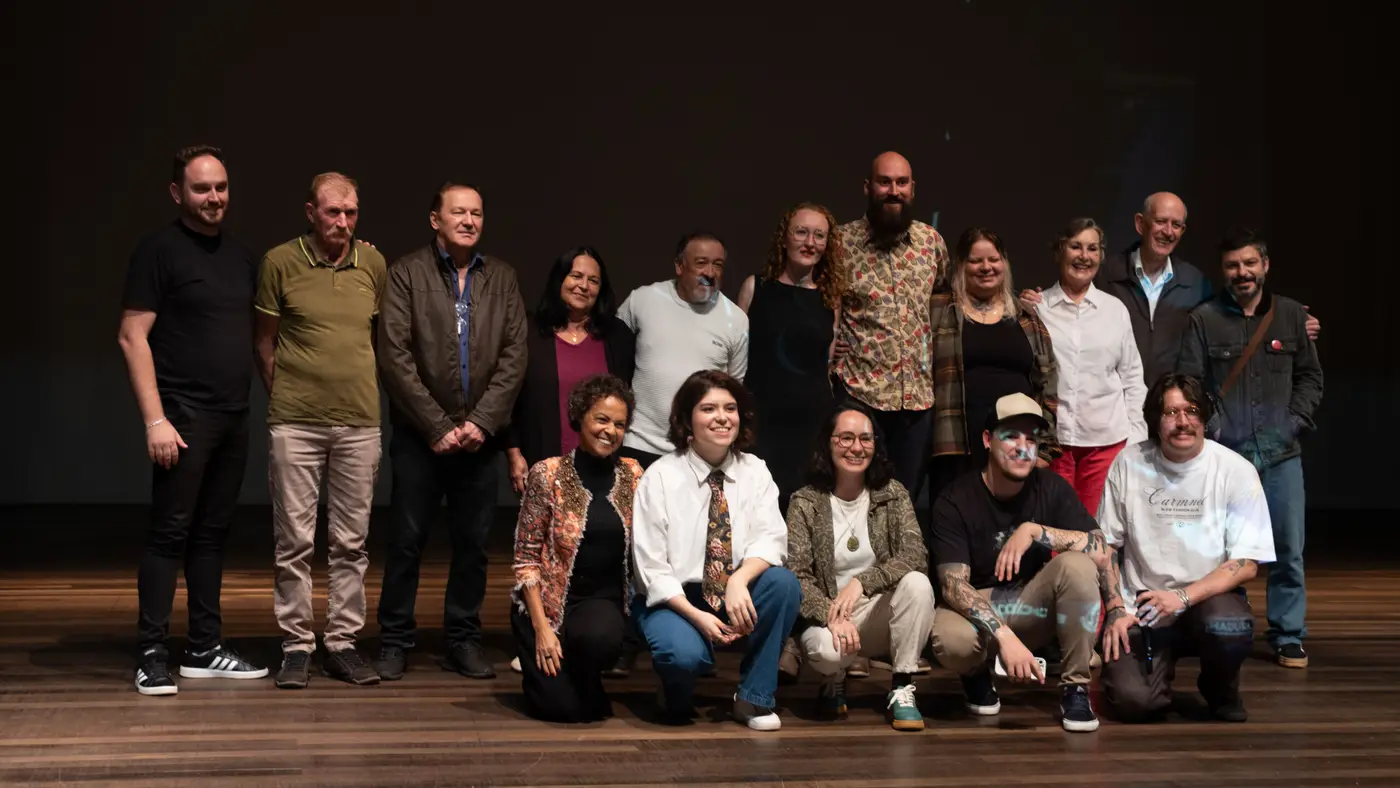
On the night of May 21, 2025, the Teatro Alfredo Sigwalt, in Joaçaba (SC), welcomed 200 people for the premiere of the moving short film O que é de César (2025), directed by Marcos José. The film dives into the complex relationships between gender identity, tradition and territory, bringing to light a story as sensitive as it is necessary about life in the countryside of Santa Catarina.
The story follows César (Marcos Oliveira), a sixty-year-old farmer who, after decades of silence, decides to come out as a crossdresser. His path is marked by challenges: from the veiled prejudice of his coworkers in the field to the tensions that arise in his marriage. Shot on real locations in Joaçaba and Herval d’Oeste, in the interior of Santa Catarina, the short shows how a simple community dance becomes a space of liberation – not only for the protagonist, but for everyone around him.
Marcos José delivers delicate, precise direction, capturing the character’s smallest gestures and eloquent pauses with sensitivity. Besides directing, the filmmaker also edits, giving the film a rare artistic unity. Carlos Carvalho’s cinematography explores the contrast between the rough textures of the countryside and the vulnerability of skin.
The audience received the film with applause, connecting older people with the new generation. In one testimonial, an elderly woman got emotional as she said how good it was to see herself on a movie screen, represented. That is what cinema is: representation and identification, the power to trace a story that connects generations and stories.
A film that provokes reflection
More than a story about self-discovery, O que é de César is a powerful portrait of the quiet resistance of those who dare to exist outside the norm. By bringing a crossdresser character into the rural setting – traditionally marked by conservative values –, the film challenges stereotypes and proposes an urgent dialogue about gender expression far from the big urban centers.
📸 Follow the film’s news on Instagram: @cesarofilme
Project carried out with funds from the Joaçaba City Government through public call for cultural funding no. 006/2024/PMJ.