
In 2020, in Curitiba, Keythe Tavares gathered poems, collages and a question that still has no easy answer: what alters the weight of things? The digital publication, released by Rachadura Visual, asks to be read slowly. Here are three poems to start with.
Who is Keythe Tavares
Keythe Tavares is a poet, visual artist and member of Rachadura Visual. She comes from Goiás, from the Brazilian cerrado that keeps sprouting in her lines, and has worked as a shop assistant, cashier, hairdresser, secretary, bookseller, cook and waitress; poetry ran through all of those jobs. At Rachadura she works with images: video, digital and analogue photography, hand-made collage. She wrote and directed the collage music video egoísta and created até o caroço (“down to the pit”), poetry and collage that reclaims the lesbian body, pleasure and self-love. In 2021 she published her first book, heranças (“inheritances”), with Editora Urutau.
The publication
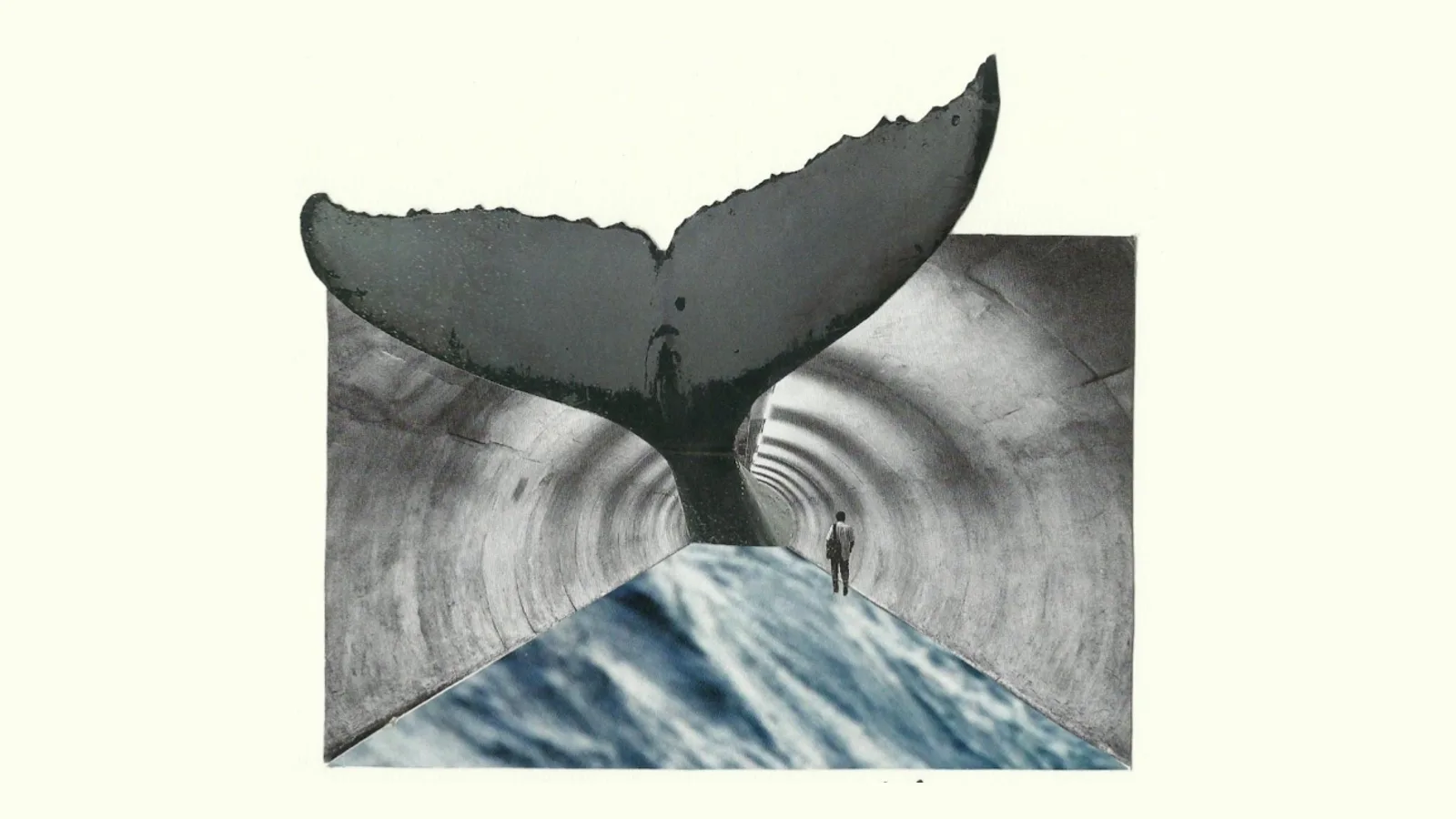
o que altera o peso das coisas? is a gathering of poetic texts whose title asks for two things before any answer: a kind, attentive look at oneself and at the other person, and open ears to notice that when the context changes, so does the size of things. Cover and collages are by the author, like the whale tail diving into a concrete tunnel; proofreading by Keythe and Myllena Magalhães. It opens with a dedication: “to you who / like me / despite the weight of things / did not give up on living. / there is more life in you / than you think.”
Short and long poems, in lowercase, almost without punctuation, from a rain shower to sertraline, from the mulberry tree to insomnia next to the one you love. Our three favourites, in the original Portuguese followed by a free translation:
1. o que altera o peso das coisas? (what alters the weight of things?)
qual a distância das coisas?
ando dez passos que parecem 50
qual a distância real das coisas?
quando me chama para tomar
uma cerveja no fim da tarde
queria que levasse em conta que
mesmo as nossas casas ficando
— em direções diferentes —
a exatas cinco quadras do bar
tenho pra mim que é muito mais
que issoKeythe Tavares
Free translation
what is the distance of things?
I walk ten steps that feel like 50
what is the real distance of things?
when you ask me out for
a beer at the end of the afternoon
I wish you’d take into account that
even though our houses lie
— in different directions —
exactly five blocks from the bar
to me it is much more
than that
The title poem measures distance with the body, not the map. Five blocks become much more when an invitation for a beer ignores what weighs on the one who walks. It is the title question turned inside out: context changes the size of things.
2. raízes (roots) — excerpt
acordei e era 1998
o pé de manga
dava muita manga
sombra esconderijo
fuga e até casa
chupei tudo até
o caroço que
lançados na terra
cresceram frondosos
(…)
na mesma época
e se espera a
primeira fruta cairKeythe Tavares
Free translation
I woke up and it was 1998
the mango tree
gave lots of mangoes
shade hiding place
escape and even home
I sucked it all down to
the pit which
thrown on the ground
grew leafy
(…)
at the same time of year
and one waits for
the first fruit to fall
Here the cerrado appears whole: the pressure cooker, the corn, the mango tree that is shade, hiding place, escape and home. Sucking the fruit down to the pit and watching the pit become a tree is an image of memory and inheritance that returns years later in the titles até o caroço and heranças.
3. orar é o abrir do coração a deus como a um amigo (prayer is opening the heart to god as to a friend) — excerpt
já roguei a deus
que removesse de mim a
vontade de transar com mulheres
ou já que se dizia onipotente
que através de um milagre me
transformasse em homem de uma vez
pra que eu pudesse assim
viver sem culpa o amor
(…)
argumento aceitável
de certo eu mesma sou deus
ou melhor, deusa.Keythe Tavares
Free translation
I begged god
to take from me the
desire to have sex with women
or since he claimed to be almighty
to turn me through a miracle
into a man once and for all
so that I could thus
live love without guilt
(…)
a reasonable argument
surely I myself am god
or rather, goddess.
The longest poem in the publication is a list of prayers: for the lost key, for a good husband, for the beans to stretch further. Until the hardest plea, to stop desiring women. The ending is not angry; it is funny and sovereign. The one answering the prayers was herself. A goddess.
Read it all
o que altera o peso das coisas? is a digital publication under a Creative Commons licence (attribution, non-commercial, no derivatives): share it freely, without profit and with credit. Download the PDF (in Portuguese) and see the project page what alters the weight of things?. To keep reading Keythe, look for heranças (Urutau, 2021).